Today's Content:
 We know we're a STEM campus. We know that our math and science colleagues worked diligently last year to learn a large amount of coursework, complete several observations, and run-through various instructional trials. We know science - technology - engineering - math. But have you had a chance to see what STEM truly means for our students?
This Falcon Focus is dedicated to illustrating the different ways we are a growing STEM campus, and to hopefully spark some cross-curricular ideas for the future.
 Inquiry, one of the main pillars of STEM education, encourages students to have voice and choice in their own learning of content, learning method, and/or product. By capitalizing on the natural curiosity of students, inquiry creates the intrinsic motivation that fuels student learning. Need an example? In Kelly DeLeon's class, students needed to learn about different rock properties, so they designed their own property tests. Check out the video below...

OK, so technically the student has his vocabulary mixed up; "malleable" means that it bends, not that it breaks. However, that was an easy fix. His explanation and demonstration indicates deep learning, the goal of STEM education.
This exploratory learning method is quite opposite of the traditional instructional model (where students "sit and get"), so to foster this inquiry-driven environment, there are three main components:
 In Problem Based Learning, students are presented an authentic problem to solve via an entry event that includes a guiding question. Students conduct a needs assessment, recording on a chart what they know about the problem, and what they need to learn in order to solve their problem. In order to solve their guiding question, students have several different workshops, where they learn the necessary information and skills to solve their problem. So, the guiding question drives the learning.
 7th Grade Math recently started a problem-based learning unit on personal finance. The entry event? Students fast-forwarded 10 years into the future to 2027 and their hypothetical graduation from Falcon University. Upon receiving their diplomas, each student learned about their degree, decided upon an appropriate career, and set about making financial plans for their lives.
To answer their guiding question, “Based on the current financial trends, how can I create a financial portfolio that will allow me to be a financially responsible citizen?”, students have received their first paycheck--and their first deductions. (They are shocked by how much money comes out of paychecks. Ha ha!) They've also learned about net and gross pay, used various percent applications, and created family budgets.

As students continue through the PBL, Five Star Ford will be visiting to educate students on purchasing their first vehicle.
For their final presentation, students will be creating a PSA on how to be a financially responsible citizen. Be sure to ask the 7th graders about their new lives as "adults"!
 Often Problem Based Learning includes engineering an actual solution to the problem. In 6th grade science, students have used the Engineering Design Process (EDP) to design and build toy prototypes.
 In their entry document (see the image to the right), students were challenged to design a toy demonstrating motion and multiple energy transformations. The finished prototypes will be tested by their target audience, Sally Frye's awesome 3rd grade classes at Snow Heights Elementary. Those students will determine which toys are the "best".
To get started, students explored different toys that demonstrated motion and energy transformations. They used their science journals to sketch and record observations about the various toys. Naturally, this led to discussion about the types of toys they might want to create themselves. Watch the videos below to see how the exploration went.
Students then set to work, learning all about motion and energy transformations in workshops that would enable them to design and build a toy that demonstrated all of required concepts.
 Students are now in the production phase. They are using recycled materials for toy parts, as well as
bringing some items from home. Many teams have also utilized our 3D printer to create parts for their designs. Most importantly, students are having deep conversations about their learning, as they problem-solve and work on solutions.
Later this week, they will be creating video presentations that explain the concepts demonstrated in their toys, and it will all go to Snow Heights. Students have thoughtfully considered their 8 to 9 year old audience, tapping into their resourceful creativity.

- STEM: Problem-Based Learning
- STEM: The Engingeering Design Process
- Continuous Improvement: Implementing PDSA - a Review
 We know we're a STEM campus. We know that our math and science colleagues worked diligently last year to learn a large amount of coursework, complete several observations, and run-through various instructional trials. We know science - technology - engineering - math. But have you had a chance to see what STEM truly means for our students?
This Falcon Focus is dedicated to illustrating the different ways we are a growing STEM campus, and to hopefully spark some cross-curricular ideas for the future.

OK, so technically the student has his vocabulary mixed up; "malleable" means that it bends, not that it breaks. However, that was an easy fix. His explanation and demonstration indicates deep learning, the goal of STEM education.
This exploratory learning method is quite opposite of the traditional instructional model (where students "sit and get"), so to foster this inquiry-driven environment, there are three main components:
- Domain 1: Creating an Environment for Learning
- Domain 2: Building Scientific Understanding
- Domain 3: Engaging Students in Science and Engineering Practices
Falcon Focus: Problem-Based Learning (PBL)

 7th Grade Math recently started a problem-based learning unit on personal finance. The entry event? Students fast-forwarded 10 years into the future to 2027 and their hypothetical graduation from Falcon University. Upon receiving their diplomas, each student learned about their degree, decided upon an appropriate career, and set about making financial plans for their lives.
To answer their guiding question, “Based on the current financial trends, how can I create a financial portfolio that will allow me to be a financially responsible citizen?”, students have received their first paycheck--and their first deductions. (They are shocked by how much money comes out of paychecks. Ha ha!) They've also learned about net and gross pay, used various percent applications, and created family budgets.

As students continue through the PBL, Five Star Ford will be visiting to educate students on purchasing their first vehicle.
For their final presentation, students will be creating a PSA on how to be a financially responsible citizen. Be sure to ask the 7th graders about their new lives as "adults"!
Falcon Focus: The Engineering Design Process (EDP)
 Often Problem Based Learning includes engineering an actual solution to the problem. In 6th grade science, students have used the Engineering Design Process (EDP) to design and build toy prototypes.
 In their entry document (see the image to the right), students were challenged to design a toy demonstrating motion and multiple energy transformations. The finished prototypes will be tested by their target audience, Sally Frye's awesome 3rd grade classes at Snow Heights Elementary. Those students will determine which toys are the "best".
To get started, students explored different toys that demonstrated motion and energy transformations. They used their science journals to sketch and record observations about the various toys. Naturally, this led to discussion about the types of toys they might want to create themselves. Watch the videos below to see how the exploration went.
Students then set to work, learning all about motion and energy transformations in workshops that would enable them to design and build a toy that demonstrated all of required concepts.
 Students are now in the production phase. They are using recycled materials for toy parts, as well as
bringing some items from home. Many teams have also utilized our 3D printer to create parts for their designs. Most importantly, students are having deep conversations about their learning, as they problem-solve and work on solutions.
Later this week, they will be creating video presentations that explain the concepts demonstrated in their toys, and it will all go to Snow Heights. Students have thoughtfully considered their 8 to 9 year old audience, tapping into their resourceful creativity.

Be looking for their prototypes to show up in the display cases sometime after Thanksgiving, once they've been returned from Snow Heights.
Falcon Focus: Implementing PDSA - a Review
Hopefully you have your Plan-Do-Study-Act system in place in your classroom. But in case you don't, or if you're in need of a refresher, here are the resources that we used last year to get started.
By clicking here or on the picture below, you can access our PDSA Smore. The Smore will walk you through how to set up (or tighten up) the PDSA process in your classroom. It includes specific instructions to get started, tips to keep it simple, and example pictures and video.Hopefully you have your Plan-Do-Study-Act system in place in your classroom. But in case you don't, or if you're in need of a refresher, here are the resources that we used last year to get started.
 |
| PDSA in Jonie Dodson's Class |
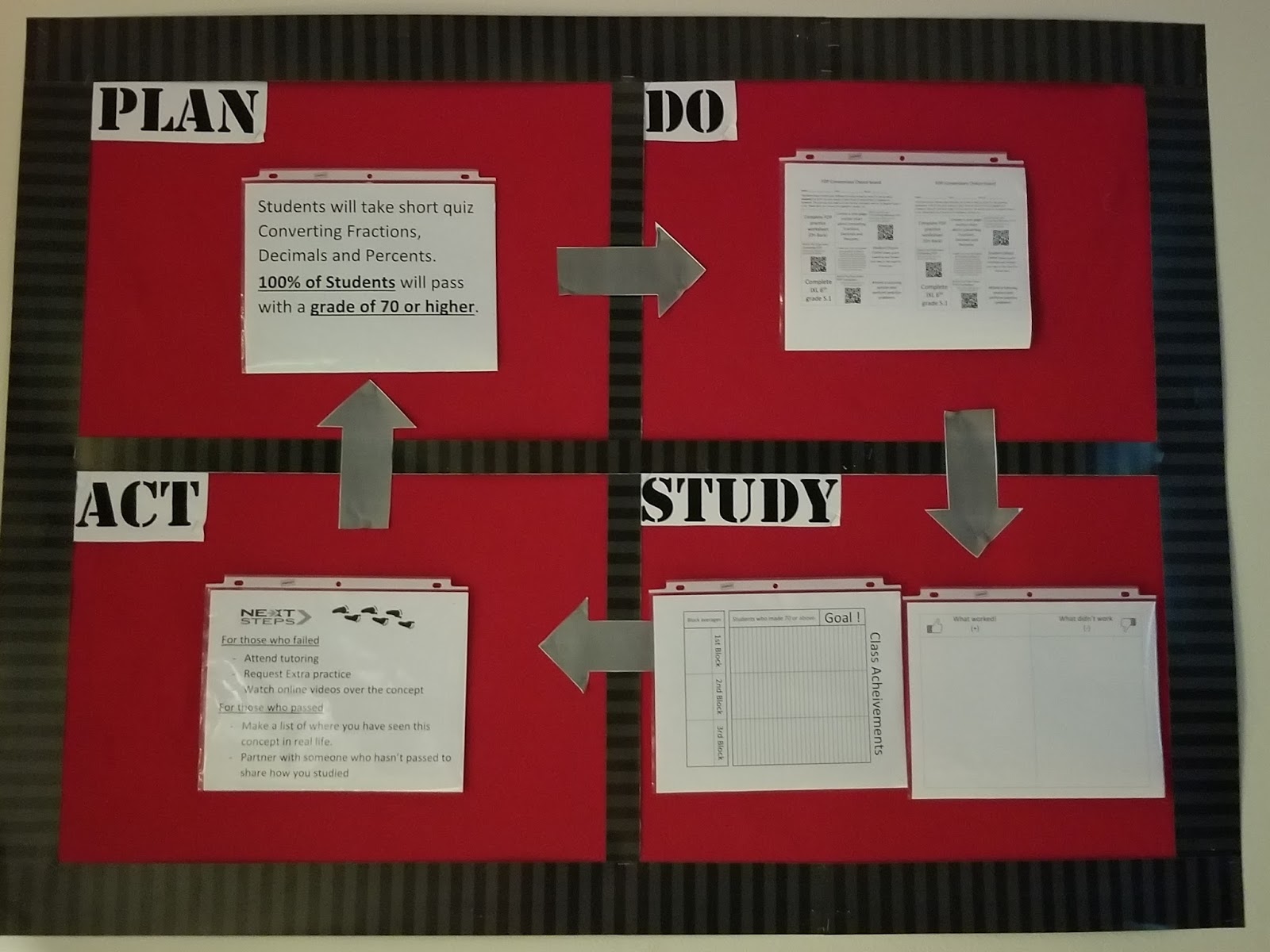 |
| PDSA in Josue Martinez's Class |

If you'd like to view some campus examples, you will want to visit my blog entry from March 2017. To visit that post, click here or on the picture below.

Finally, to view the original Leaders of Learners PDSA presentation from last January, click here or on the image below. That presentations includes district rationale and even more examples.

If have any questions or would like some help implementing these or other strategies, please let me know. And remember...
It's a great day to be a Falcon!


