Showing posts with label vocabulary. Show all posts

Tuesday, September 4, 2018

Tuesday, September 4, 2018

Today's Content:
  • BOLD Literacy: Reading, Reading Everywhere!
  • Instructional Coherency: Help With All the Things
  • Campus of Learning: #ObserveMe
Thank you so much for a great second week of learning and instruction at NRMS!  The 2018-19 school year is off to a Falcon-tastic start, and there is so much great work going on already.  Keep on reading to celebrate the hard work of your peers and students and to gain some insight into different instructional priorities.

Falcon Focus: Reading, Reading Everywhere! 


In Birdville we are very focused on Building Opportunities for Literacy Daily, and Falcons have embraced the chance to read, write, think, and discuss.  

All around campus you can catch glimpses of students' and teachers' reading lives, and listen to them sharing in a culture of literacy.  

See below for examples of reading displays, book talks, and other suggestions.


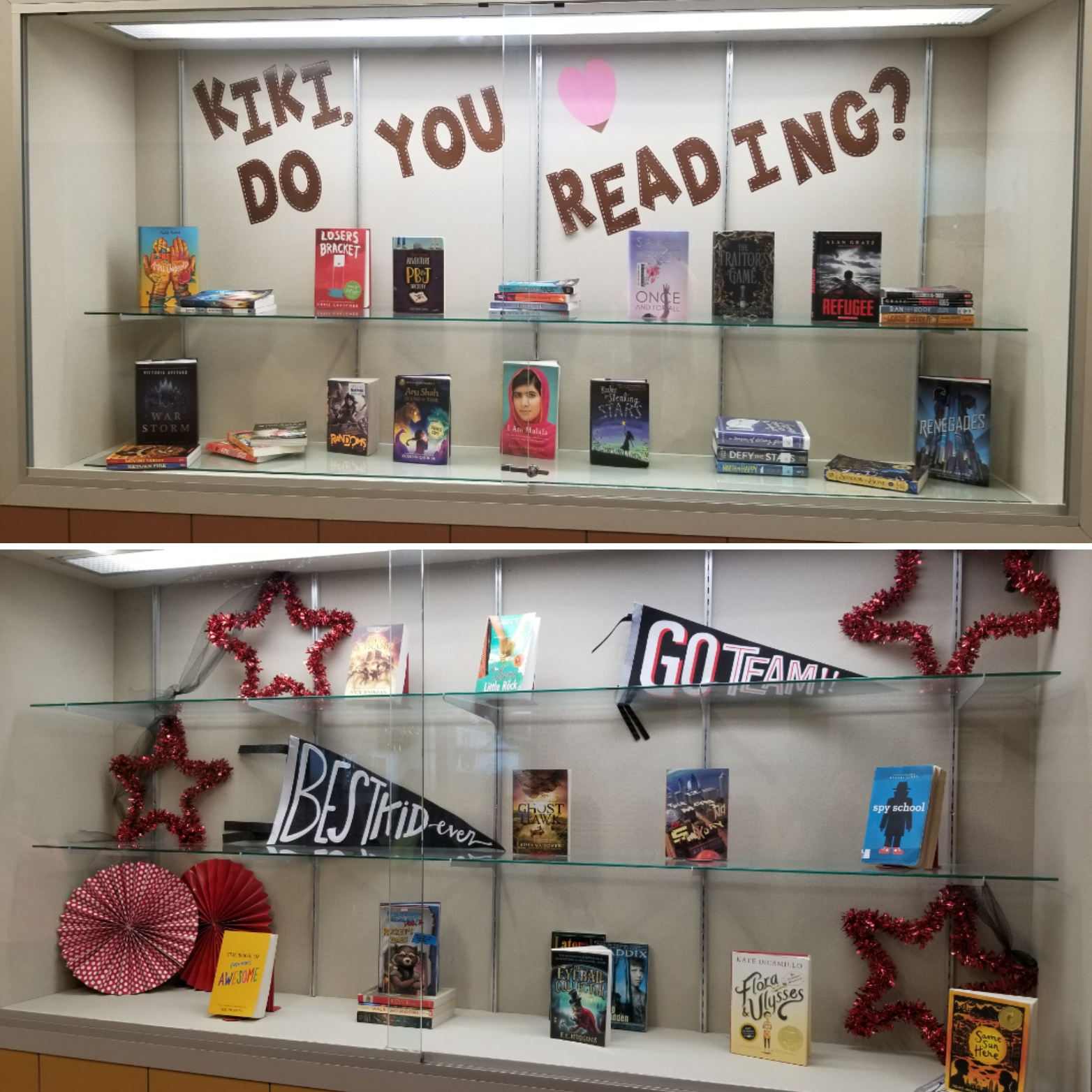
Students cozy up with a good book where ever they can.


Student book talks help students spread the word about reading.

Book displays help students (and teachers) find their next great read.


Brittany Joyner invites students to share their book suggestions.  She also encourages them to read Lone Star Readers by celebrating their progress and reading alongside them.

The Lone Star Reading Program invites students to read their choice of 10 books from a list, after which they get to attend a catered luncheon with an author.  This year, the guest of honor is Jason Reynolds, author of Long Way Down and Ghost.  Want to read alongside the students as well?  Check in the library for this year's list!

Faculty and staff get into the reading fun with a variety of different texts.
Looking for a good book to read?  Below, Sherryl Dickey shares a book talk over the book she just finished, I'll Push You by Patrck Grey.

 jklj


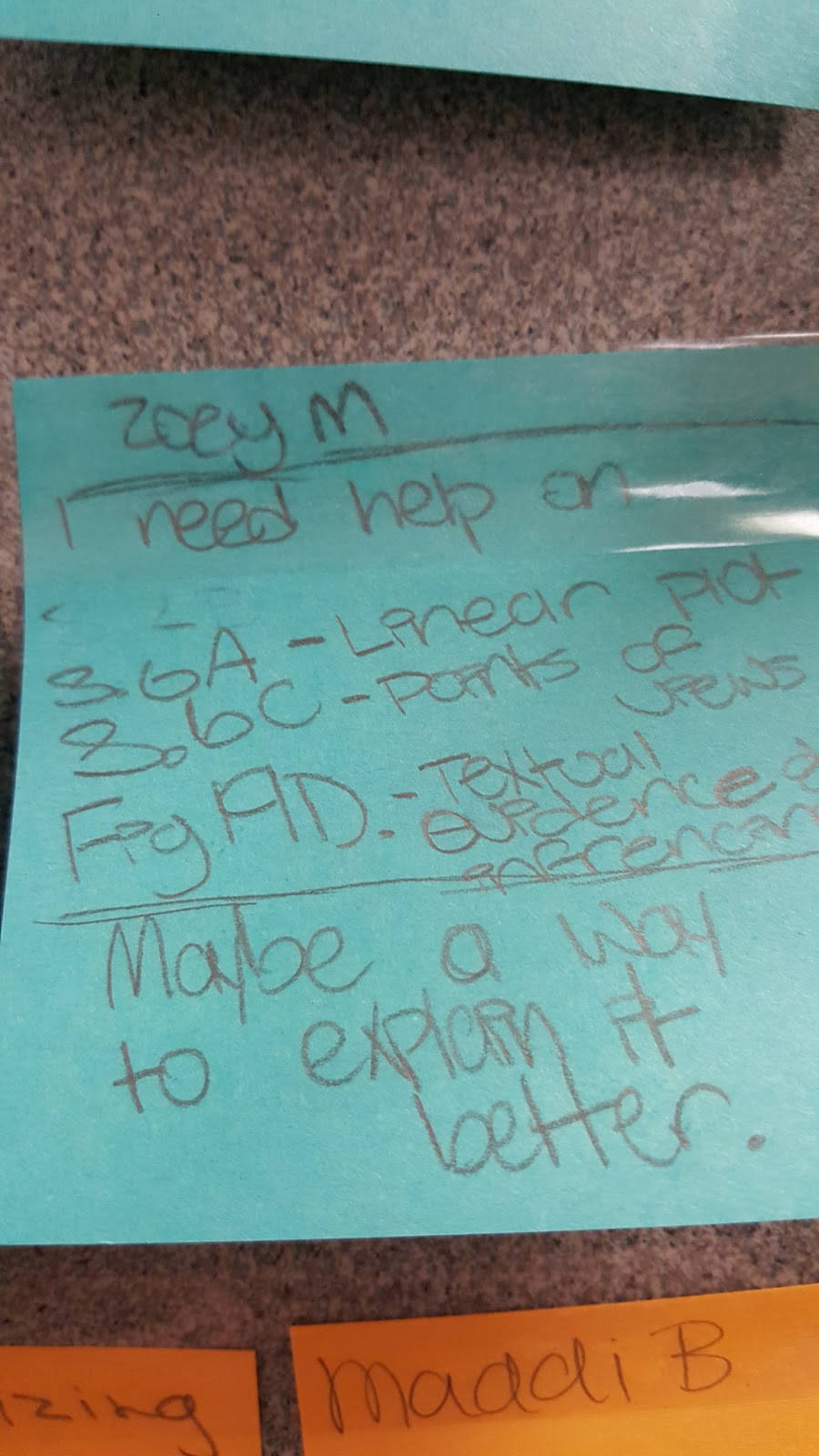
Falcon Focus: Help With All the Things

During our back-to-school professional learning, several teachers led us through instructional campus expectations.  Extra thanks to: Robin Asaff, Lindsey Cato, Felicia Cherry, Kylie Cranford, Teresa Davis, Jonie Dodson, Beverly Goodman, Kathy Harvell, James Hollis, Lori Liles, Karen Sanchez, and Amy Thornton for their leadership and hard work.  

All the presentation materials used can be found in our NRMS Google Classroom, but I've also included a link below to the folder.  There are also a few additional resources to support you with "all the things".  Click on the red titles to get to the Google folder.


Monday, August 13 Professional Learning - In this folder you can find:
  • Falcon Culture 2018-19
  • Culture of Literacy
  • Tier 1 Priorities & Instructional Coherency
  • Literacy Strategies
  • Continuous Improvement Expectations
  • Workshop Model & 5E
  • Building Vocabulary

Thursday, August 16 Professional Learning - In this folder you can find:
  • Google Classroom for Beginners
  • Google Classroom for Experienced Teachers
  • Plan-Do-Study-Act
  • Making Your SMART Goals Smarter
  • Behavior Intervention Strategies
  • Mission Statements: Defining Purpose


Instructional Coherency Documents - This is the list of campus instructional expectations for all of our departments.  We will be developing them for Special Ed and Electives through our PLC work this year.


Continuous Improvement Google Site - This Google Site includes examples and how-tos for all of the Continuous Improvement pieces.  I will continue to update it with relevant examples from our campus.


Falcon Focus: #ObserveMe

#ObserveMe originated from the collective realization of many educators that there was an opportunity to learn from each other.  In a Twitter Chat in 2016, one teacher posted the idea of inviting other teachers into their classroom to give targeted feedback. Other educators and groups such as @Robert Kaplinsky and @Teacher2Teacher jumped on this idea and turned it into the movement that it is just two years later.

To participate, determine two to three goals that you are working on in your classroom.  Create a short Google Form that visitors can complete in order to collect your feedback.  Finally, post an invitation to others to come on in and share their observations.  

Jonie Dodson is participating in #ObserveMe this school year.  She has shared her editable #ObserveMe sign here.  She would appreciate you stopping in to share your thoughts about her classroom!

Want to read more?

Robert Kaplinsky started the #ObserveMe movement with this blog post in 2016. 


One year later, Kaplinsky wrote a post reflecting the #ObserveMe movement and different "tricks" he wish he had known at the beginning.


Jennifer Gonzalez, creator of the blog Cult of Pedagogy, wrote a piece on why we need to observe each other. 

If you decide to participate in #ObserveMe, please let me know!  I love visiting classrooms, and would enjoy offering feedback.  I will be creating my own #ObserveMe as well.  Be on the lookout for a sign on my office door!


If have any questions or would like some help implementing these or other strategies, please let me know.  And remember...

It's a great day to be a Falcon!


Monday, April 25, 2016

Monday, April 25

Today's Content:
  • Tier 1 Priorities:  Vocabulary Ladders
  • Shifting Culture: Falcon Way Update
  • Reminders:  Falcon Walks & "Believe" Challenge
  • Newsworthy:  Mickie Siek in FW Star-Telegram

Falcon Focus: Vocabulary Ladders

All content areas are focusing on vocabulary; this is no surprise.  So when two of our teachers stumble on the same vocabulary strategy and are singing its praises, it needs to be shared with all.  

Both Lindsey Cato and Jonie Dodson are working their way through the TAGT On Demand training, and have learned a new vocab strategy  - vocabulary ladders.  Within this application strategy, there are multiple options for students to process their learning.

Lindsey's class explained the connect of each new word to the original.
Lindsey Cato had her students identify a key academic word on the highest rung.  Then, they selected one letter from the original word and came up with related words for the lower rungs.

Afterwards, her students used the right side of the ladder to explain the connections of the new words to the original word.


Jonie Dodson's students used the same graphic organizer but worked with the vocab a little differently.  Starting with the key word, students pulled a letter from each subsequent word to come up with the new related words.  At the end, she had them write a summary that connected all of the terms together.

Jonie's class used the vocab ladder to write a summary.

Falcon Focus: Falcon Way Update

This weekend I sent out the Padlet with the notes from last week's teacher meeting.  However, I wanted to share with you the feedback we've collected from students so far.
Click on the slide to see the guidelines for discussion.
Students were asked for their opinions on how to live the CORE values on campus and improve campus culture overall.  Their responses are listed below.


Falcon Focus: Falcon Walks & "Believe" Challenge

Just a quick reminder of a couple of campus initiatives for the end of the year:

First - the Falcon Learning Walks, our structure for informal peer observation.  As we discussed on Friday, April 1st, the purpose is to provide teachers with self-determined, collaborative professional development.  You identify the type of observation that will best help you and your students, and then make it happen.

Before visiting a class, review our Learning Walk Protocols:

  • Intentionally plan your observations.
  • Walk in with a growth mindset.
  • Observe for a minimum of 15 minutes.
  • Remember to be an observer and not a participant in the lesson.
  • Complete the Falcon Reflection Form to let your Academic Coach know if you need any assistance.
You may review the Learning Walk handout for a more detailed refresher.  A few teachers have already completed their walks, and they were able to absorb great ideas to implement in their own classes.  Be sure to go for a walk now, while there are still a few weeks to try out something new.


Second - the "Believe" Challenge, your opportunity to reflect a student you really believe in.  The goal here is simply to let our students know just how much we do believe in them, their dreams, and their future.  If you would like to film the conversation, I am happy to assist.  Either way, please send me your names.  Let's share the love with our students! <3


Falcon Focus: Star-Telegram

As a result of their selection into the Mount Vernon trip, Mickie Siek and Watauga Middle's Elizabeth Cumbie were featured in the Star-Telegram last Friday.  The article highlights a lot of our 8th graders talking about the Constitution; there are some fantastic quotes!  Check out the article by clicking on the link below.
Click the image to go to the article in the FW Star-Telegram.
If have any questions or would like some help implementing these or other strategies, please let me know.  And remember...

It's a great day to be a Falcon!

Friday, March 4, 2016

Friday, March 4

Today's Content:
  • Tier 1 Priorities:  Academic Vocabulary in Toby Osborn's World Cultures class, and Analyzing TEKs in Mickie Siek's US History class
  • Tier 1 Priorities: Socratic Seminar in Lori Liles' Texas History class
  
Falcon Focus: Academic Vocabulary in Word Walls

Feel like you've got too much on your walls?  It may be that you haven't settled on a way to really pull that information into your daily instruction.  By adding a header, Toby Osborn has turned the Social Studies Thinking Words into part of his students' daily routine.  

Academic Word Wall in Toby's Class

When students come in, they can read the TEK and the language objective, and they can review all of the academic vocabulary (with graphics!).  However, by adding the Thinking Words wall, students now know exactly what process they'll be using to work with all of that content.   All Toby has to do is circle the appropriate verb.


Falcon Focus: Academic Vocabulary in TEKs

If you need help getting your students to take ownership over the TEKs, try this approach that Mickie Siek uses in her 8th grade US History classes.  We know that students need to see the TEKs in all their scholarly glory, but sometimes (a lot of times) the meaning gets lost in the academic language.

When students are introduced to a new standard, Mickie's classes work together to analyze the TEK for  unknown words and academic vocabulary.  My video-editing skills here are not great - but her strategy for introducing new TEKs is.


Kids can create their own word walls, connecting the TEKs to the vocabulary displayed around the room.  Simple and to the point, having the kids discuss what they don't know about the standard will lead them to a deeper understanding of what they need to know.

Falcon Focus: Socratic Seminar

Finally, if you have never heard of Socratic Seminar, never used Socratic seminar, tried Socratic Seminar and tanked, or facilitated Socratic Seminar like a boss, you should take a couple of minutes to watch this next clip.  This week, Lori Liles created the environment for a lively academic discussion on states' rights and Texas secession.  Students spent day 1 prepping for the seminar through close reading and question writing.  By day 2, they were able to (almost entirely) move through an academic discussion on their own!


Students demonstrated respect for others' opinions, stayed on topic, and even invited more hesitant participants into the fray.

Socratic seminar requires a little prep work, but the results far outweigh the challenges.  Sometimes adults can't have conversations like this, so just imagine what our students can accomplish if they can learn how to express their informed opinions and disagree with others respectfully.

Word.


If have any questions or would like some help implementing these or other strategies, please let me know.  And remember...

It's a great day to be a Falcon!


Monday, February 29, 2016

Friday, February 26

Today's Content:

  • Differentiated Instruction: Growth Mindset
  • Tier 1 Priorities: Vocabulary: Word Stems Across Content

Falcon Focus: Growth Mindset

Growth Mindset.  You've noticed the chatter and may be wondering, is this really a thing?  Yes, it is!  Psychologist Carol Dweck has found that there are two mindsets, fixed and growth.  People with a fixed mindset believe that we are born with a specific amount of intelligence and talent; therefore people excel at some things but struggle with others.  Those with a growth mindset believe that intelligence can be developed, and that the learning comes from the effort that leads to success.

So why does this matter for education?  Think about the way your students (sometimes) approach their own learning process.  When a student says, "I never get this," or "Reading/math/art/music/any fill-in-the-blank-topic is just not my thing," they are already setting themselves up to fail.

And it's not just about trying; growth mindset is about trying harder.  Even when we have an innate talent or developed a skill, there's always room for improvement.  So, in a nutshell: if we want our kids to grow their skills, they have to grow their mindset, too.

Promote Growth Mindset Self-Talk!
Display created by Brittany Joyner & Amy White

Want to learn more about Growth Mindset?  Read Carol Dweck's book, Mindset: The New Psychology of Success, or click here to read more information. 


Falcon Focus: Word Stems Across Content

As we continue to develop vocabulary focus across all of our content areas, everyone is looking for a more powerful form of teaching new words.  Why not try using word stems?

We've seen how 7th grade Reading uses TPR (Total Physical Response) to teach word stems:  
Word Within a Word on the Board (above)
Miss White teaching Word Stems in class (below)


This very specific, targeted vocabulary instruction over the meaning of parts of words can work in any content area.  

Try intentionally teaching your students the meanings of parts of their words.  Below you can see how some different teachers are intentionally using word stems to:

a) breakdown differences between academic vocabulary in TEKs,
b) compare words with related meanings in academic word walls, and 
c) provide students with a tool to determine word meaning on their own. 


Want to know what word stems have already been taught, or what the current word stems are in ELAR?  Just ask me, or your friendly neighborhood Reading teacher; they or I will be happy to share those lists with you.  (Also, I'll be updating the hallway word walls sometime next week.)


If have any questions or would like some help implementing these or other strategies, please let me know.  And remember...

It's a great day to be a Falcon!

Friday, February 19, 2016

Friday, February 19

Today's Content:

  • SIOP: Language Objectives in different classrooms
  • Continuous Improvement: Student Analysis of Data: 8th grade ELAR
  • Differentiated Instruction: Using Total Physical Response in 7th grade Reading & 6th grade science

Falcon Focus: SIOP

The SIOP committee has spent the last few weeks working on how to bring the Language Posting Language Objectives in our classrooms helps our ELLs become more aware of how the tasks they perform in class connect to their learning objectives.  Not sure what an effective Language Objective looks like?  Here are a few great examples from around our campus!


Falcon Focus: Continuous Improvement

8th Grade ELAR recently used a data day for students to assess their own learning for the year thus far.  Students keep data folders, and compared all of their test results over the course of the first semester to identify different TEKs that were strong, and TEKs that had room for improvement.  


Particular emphasis was placed on growth in Figure 19 TEKS - basic reading comprehension.


Other than celebrating overall class growth, students also looked at their results individually, and identified personal areas of strength and growth.


Falcon Focus: Differentiated Instruction

So why do we want students to move in class?   Because brain research says so.  Studies show that physical activity increases memory retention and recall.  (Click here to read an article summarizing some of the brain research of David Sousa.)

Some great examples of total physical response (TPR) are evidenced on our campus.  Watch the videos below to see Amy White's 7th grade Reading class using TPR to remember the meaning of stem vocabulary, or to see Ted Odum's 6th grade Science class dancing to a plate tectonics rap.  You also get to hear the beatin' skillz of Ted himself!


This was only the 2nd or 3rd time Amy's class had done this activity.


Same for Ted's class.  Hopefully there will be a whole cafeteria flash mob soon; I'll be sure to post!


If have any questions or would like some help implementing these or other strategies, please let me know.  And remember...

It's a great day to be a Falcon!

Friday, December 4, 2015

Friday, December 4

Today's Content:

  • SIOP: Flipped Classroom in Lindsay Cato's 7th Grade Science
  • Problem of Practice: Writing & thinking critically about students' art
  • Tier 1 Priorities:  Check-in from the 11/18 faculty meeting


Falcon Focus:  SIOP

Lindsay Cato has started flipping her classroom by recording previews of her daily lessons.  Each 3-7 minute video includes the daily warm-up, a brief explanation of concepts and activities for the day, and key academic vocabulary.  Students will have access to the videos via YouTube, and are also encouraged to come in before or after school.  The target audience are her LEP students; however, it will benefit all of her kids!  

If you have any questions about Screencastify or are interested in flipping parts of your class, talk to Lindsay, Mary Terry, or Rashel Larson.


Falcon Focus: Problem of Practice

Rebekah Luckett's select art class created still lifes of objects personal to them.  Students were instructed to select 7 objects so dear to them that the would want to rescue them above all other possessions.  After completing the art work using a variety of mediums, students then went on to reflect on and write about their artwork.  Why were these objects important?  What do those objects reveal about me as an individual?  
The class then reflected on each other.  How had the other artworks impacted them?  What did they notice about the other students' pieces?  Finally, they summed up the group reflections in a hashtag.  #checkoutthefronthallway


Falcon Focus: Tier 1 Priorities

Finally, a follow-up to our faculty meeting on 11/18.  At the end of the meeting we used Padlet as a means to reflect on the Tier 1 priorities and instructional practices that we are focusing on across the different content areas.  Clearly, there's quite a bit of overlap from one content area to another, and you guys did a great job of reflecting on specific strategies and areas you wanted to focus on in your classroom.

Please let me know if you have any questions about any of the Tier 1 Priorties, or if there is some way that I can support you in implementing any of this.  I hope everyone has a great day, and remember...

 Tier 1 Priorities Parking Lot

It's a great day to be a Falcon!

ThingLink: Portrait of a Graduate